
Beware The Prepaid Debit Card Trojan Horse

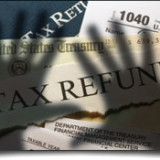
The use of prepaid debit cards for tax refunds hurts the poorest citizens 

by Curtis Arnold

It’s a cliché, but it bears remembering: if something sounds too good to be true, it probably is. And to be sure, the prepaid debit card industry has a long and ongoing legacy of hyperbole, with card issuers saying plenty about the ease and convenience of their plastic products and precious little about often-predatory fees.

Obviously, it’s no surprise whatsoever to see companies with wares to hawk ignore or downplay the perils of prepaid debit cards and instead tout their benefits. But increasingly it is presumably impartial and consumer-oriented governments that are extolling the wisdom of using prepaid debit cards to deliver tax refunds to the millions of Americans – 17 million adults, or 8 percent of all U.S. households, by the Federal Deposit Insurance Corporation’s (FDIC) latest tally – who lack bank accounts and can’t take advantage of direct deposit.

The arguments government officials in states like Oklahoma, Connecticut and Virginia make in favor of utilizing prepaid debit cards to deliver tax refunds to so-called unbanked citizens sound persuasive. For the citizens themselves, receiving a refund via a prepaid debit card instead of a paper check means they’ll get their money weeks faster than if they had to wait for snail mail. Speed is no small matter for many low-income Americans who use their refunds to pay off high-interest payday loans that they may be forced to take while waiting for a check from the U.S. Treasury.

The governments themselves also insist that prepaid debit cards are a boon to all taxpayers. The crux of the argument is that cash-strapped governments can garner big savings by delivering refunds electronically with prepaid cards instead of printing and mailing physical checks. At least one study reported that it cost nearly $1 more to mail a check than to deliver an electronic payment.

In this era of belt-tightening austerity, that sort of taxpayer-saving government efficiency is to be cheered, right? Not exactly. Persuasive new research by John Friedman, an assistant professor of public policy at the Harvard Kennedy School, dismantles the deceptively alluring argument that tax refunds delivered on prepaid debit cards are good for everyone. In an article at Bloomberg Law, Friedman concedes that state governments can trim their own costs by switching from paper checks to prepaid debit cards. But the problem is that many of the hefty fees associated with prepaid debit cards – such as an account set-up charge and fees for taking money out of an ATM – are pushed off on to the taxpayers receiving the refunds. In his research, Friedman cites data from the now discontinued federal tax refund program in which taxpayers received money on a MyAccountCard. Recipients of refunds on that particular prepaid debit card paid an average of $19 during the first six months of use, an amount far and above the $1 governments save.

What is particularly troubling about this rush towards offering – and sometimes actually mandating – those who don’t have bank accounts receive their refunds on prepaid debit cards is who is being impacted. Unbanked Americans are typically poor. Forcing the poorest among us to shoulder what amounts to a minimal government cost savings sounds too bad to be true. Unfortunately, it increasingly is.
Category: Best Low Fee Prepaid Cards

Millions of people are turning to prepaid debit cards as a smart alternative to carrying cash and writing checks. Almost anyone can qualify and they don’t require a credit check or a bank account.

Though they carry credit card logos and can be used anywhere a credit card is used, unlike a credit card, they do not offer a line of credit. The user can only spend the amount that has been loaded onto the card or placed into the account associated with the card.

There are dozens of debit cards on the market, many of them issued by the same bank, but fee structures are vastly different. Bestprepaiddebitcards.com has done all the research for you and provides comprehensive reviews to help you decide which card is best for you.


GO2bank Offers Overdraft Protection up to $300.

And build your credit with the GO2bank Secured Visa® Credit Card with no annual fee*, no credit check*, and no impact to your credit when you apply. (sponsor link)


  • Beware The Prepaid Debit Card Trojan Horse

    Beware The Prepaid Debit Card Trojan Horse

    The use of prepaid debit cards for tax refunds hurts the poorest citizens 

    by Curtis Arnold

    It’s a cliché, but it bears remembering: if something sounds too good to be true, it probably is. And to be sure, the prepaid debit card industry has a long and ongoing legacy of hyperbole, with card issuers saying plenty about the ease and convenience of their plastic products and precious little about often-predatory fees.

    Obviously, it’s no surprise whatsoever to see companies with wares to hawk ignore or downplay the perils of prepaid debit cards and instead tout their benefits. But increasingly it is presumably impartial and consumer-oriented governments that are extolling the wisdom of using prepaid debit cards to deliver tax refunds to the millions of Americans – 17 million adults, or 8 percent of all U.S. households, by the Federal Deposit Insurance Corporation’s (FDIC) latest tally – who lack bank accounts and can’t take advantage of direct deposit.

    The arguments government officials in states like Oklahoma, Connecticut and Virginia make in favor of utilizing prepaid debit cards to deliver tax refunds to so-called unbanked citizens sound persuasive. For the citizens themselves, receiving a refund via a prepaid debit card instead of a paper check means they’ll get their money weeks faster than if they had to wait for snail mail. Speed is no small matter for many low-income Americans who use their refunds to pay off high-interest payday loans that they may be forced to take while waiting for a check from the U.S. Treasury.

    The governments themselves also insist that prepaid debit cards are a boon to all taxpayers. The crux of the argument is that cash-strapped governments can garner big savings by delivering refunds electronically with prepaid cards instead of printing and mailing physical checks. At least one study reported that it cost nearly $1 more to mail a check than to deliver an electronic payment.

    In this era of belt-tightening austerity, that sort of taxpayer-saving government efficiency is to be cheered, right? Not exactly. Persuasive new research by John Friedman, an assistant professor of public policy at the Harvard Kennedy School, dismantles the deceptively alluring argument that tax refunds delivered on prepaid debit cards are good for everyone. In an article at Bloomberg Law, Friedman concedes that state governments can trim their own costs by switching from paper checks to prepaid debit cards. But the problem is that many of the hefty fees associated with prepaid debit cards – such as an account set-up charge and fees for taking money out of an ATM – are pushed off on to the taxpayers receiving the refunds. In his research, Friedman cites data from the now discontinued federal tax refund program in which taxpayers received money on a MyAccountCard. Recipients of refunds on that particular prepaid debit card paid an average of $19 during the first six months of use, an amount far and above the $1 governments save.

    What is particularly troubling about this rush towards offering – and sometimes actually mandating – those who don’t have bank accounts receive their refunds on prepaid debit cards is who is being impacted. Unbanked Americans are typically poor. Forcing the poorest among us to shoulder what amounts to a minimal government cost savings sounds too bad to be true. Unfortunately, it increasingly is.

  • The Occupy Prepaid Debit Card Announces Fees

    The Occupy Prepaid Debit Card Announces Fees

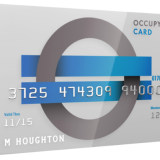
    In an announcement that was equal parts press release, fundraiser and call to arms, the Occupy Money Cooperative unveiled fees for its new prepaid debit card.

    by Chris Warren

    The Occupy Movement marked the second anniversary of its Wall Street occupation in a way that few would have expected when thousands took to the streets of New York to express their unhappiness with what they declared to be a rigged financial system: by asking members of the 99% for money and releasing proposed fees for its very own prepaid debit card. On Sept. 16 the so-called Occupy Money Cooperative, an entity formed last July to offer financial products and services, officially launched a fundraising campaign to raise enough capital to become an actual player in the financial services industry so many Occupy supporters loathe.

    “It’s finally time!” declared a mass email to Occupy supporters on Sept. 13. “We are launching a crowd-funding campaign to kick-start an innovative, democratic, transparent and cooperatively-run company to provide access to low-cost, high-quality financial services to everyone.” Raising sufficient start-up capital to actually be able to issue a prepaid debit card, let alone any other products and services, is just the first of many hurdles the Occupy Money Cooperative will face – an issue we examined in detail earlier.

    Challenges aside, Occupy’s foray into the prepaid debit card space – with the group’s avowed commitment to not maximize revenues and profits – has the potential to shake-up the industry. That possibility was buttressed when details about the Occupy Card, which will be covered by Federal Deposit Insurance Corporation (FDIC) insurance, and its fees were released just days before the group began its fundraising efforts.

    To get a sense of just how different the Occupy Card’s approach to business is from other prepaid card issuers all one has to do is note the inclusion of a box called “How To Avoid” on its proposed fee schedule. If that’s not enough, take a look at the proposed rock-bottom fees themselves. For instance, there is no initial purchase charge for the card, a fee that usually runs an average of $1.15. More importantly, the monthly fee for the Occupy Card is just $0.99 – and there’s no charge if you load enough money onto the card to become a No Monthly Charge Member – compared to the average monthly fee of $4.88.

    It’s also free to load money onto the card via direct deposit – which is standard among the more consumer-friendly prepaid cards – although adding cash using MoneyPak or Swipe Reload at 7-Eleven and CVS stores costs $4.95, (a fee charged by the stores and not the Occupy Money Cooperative). To get around this charge, the fee schedule offers up this tip. “If you can, use Direct Deposit, or deposit checks and wait – these methods are FREE. When using MoneyPaks remember 3 $100 deposits will cost $14.85. A single deposit of $300 will cost $4.95.” And so it goes with the other fees. Getting cash from an ATM will run $1.95 due to network and third party fees (“Instead, use cash back from stores,” advise the Occupy Card issuers).

    Not all fees can be avoided. For instance, a card replacement runs $9.95 because it requires printing a new one (advice: “don’t lose your card”). Still, if the Occupy Card gains traction, it very well could change the financial services industry in a way that sit-ins and marches never could.

Credit and Debit Card Ratings