
Should You Put Your Tax Refund On A Prepaid Card?

By Curtis Arnold and Lucy Lazarony

All the major tax preparation companies give you this option, but does it make financial sense?  Here’s a look at the pros and cons of receiving a tax refund via prepaid cards with direct deposit.

Fast access to your tax refund. Need a faster tax refund?  E-filing your return and requesting a tax refund be sent to a prepaid card with direct deposit or a bank account is the fastest way to go, according to the IRS website. The IRS is issuing refunds to taxpayers in as few as 10 days for those who e-file and opt to receive their tax refund by direct deposit.

“Direct deposit is typically better,” says David Newville, senior policy analyst at the Center for Financial Services Innovation. “You’re going to get it quicker and it’s going to be more secure than a check.”

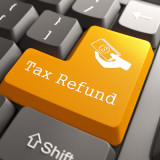
Pocket that tax refund, pronto! (Photo credit: Tax Credits)

Keep tax refund money separate from other accounts. Have a special project in mind for that tax refund but worried the money will disappear quickly amid your day-to-day spending? Putting a tax refund on a prepaid card will keep the money separate from your other accounts.

“You might not want to dump it into a bank account because it might get lost in day-to-day charges,” says Ben Jackson, a senior analyst at the Mercator Advisory Group.

Watch out for fees. The biggest downside to receiving your express tax refund on a prepaid card is the assortment of fees associated with prepaid cards.

Joe Ridout, a spokesman for Consumer Action, a San Francisco-based consumer advocacy group, sees no advantage to receiving a tax refund on a prepaid card, especially for people with bank accounts who could simply opt to receive a direct deposit of their tax refund into a checking or savings account.

“If you have a bank account, there’s no advantage whatsoever to getting your tax refund on a prepaid card,” Ridout says. “You needlessly would forfeit some of your tax refund with the fees that come with these cards.”

Ridout added that prepaid cards may be appealing to consumers without bank accounts but the fees associated with prepaid cards can make them a costly choice. “The best money saving solution for consumers is to open a bank account,” Ridout says. “Because these cards are a solution that will cost you money.”

Still, opening a bank account may simply not be possible for some people. And while it is certainly true that far too many prepaid cards charge fees that don’t make a speedy refund a wise choice, there are some exceptions. Shane Tripcony, of BestPrepaidDebitCards.com commented, “Typically, bank accounts such as free checking accounts are cheaper to operate, but for some people, the built-in limitations such as no overdraft fees make prepaid debit cards a viable alternative.  As fewer banks are offering free checking accounts, the prepaid card option becomes a good choice, despite differences in fees.  It is all in how you will use the account.”

In fact, if you are considering a prepaid card for your tax refund, here are some low-fee options that will take the smallest bite out of your money.

Serve from American Express . There simply aren’t many fees associated with Serve, American Express’s consumer-friendly prepaid debit card. There’s no activation fee, it’s easy to dodge the $1 monthly account charge and, importantly, cash withdrawals from MoneyPass ATMs are also free. It’s easy to get your federal tax refund sent quickly to your Serve account and, yes, there’s no charge.

U.S. Bank Convenient Cash Card. Another good option, particularly if you live in an area with plenty of U.S. Bank ATMs, is the U.S. Bank Convenient Cash Card. Like most prepaid debit cards, it’s a snap to get your tax refund loaded for free onto a U.S. Bank Cash Card. But what sets it apart from other options is that cash withdrawals from U.S. Bank ATMs are free, as are direct deposit and bill pay.

Chase Liquid. With 5,500 Chase branches nationwide, it’s easy to withdraw the tax refund you get loaded onto the Chase Liquid prepaid card without incurring an unwanted ATM charge. For a $4.95 monthly account charge, Chase Liquid makes it simple to avoid a long list of other fees as well.  It makes the card a worthy option for receiving a quick, relatively fee-free tax refund.

But remember, because fees on prepaid cards vary so widely, it’s important to study the terms and conditions on prepaid cards carefully before signing up for one.

Tag: prepaid debit cards

  • Should You Put Your Tax Refund On A Prepaid Card?

    Should You Put Your Tax Refund On A Prepaid Card?

    By Curtis Arnold and Lucy Lazarony

    All the major tax preparation companies give you this option, but does it make financial sense?  Here’s a look at the pros and cons of receiving a tax refund via prepaid cards with direct deposit.

    Fast access to your tax refund. Need a faster tax refund?  E-filing your return and requesting a tax refund be sent to a prepaid card with direct deposit or a bank account is the fastest way to go, according to the IRS website. The IRS is issuing refunds to taxpayers in as few as 10 days for those who e-file and opt to receive their tax refund by direct deposit.

    “Direct deposit is typically better,” says David Newville, senior policy analyst at the Center for Financial Services Innovation. “You’re going to get it quicker and it’s going to be more secure than a check.”

    Pocket that tax refund, pronto! (Photo credit: Tax Credits)

    Keep tax refund money separate from other accounts. Have a special project in mind for that tax refund but worried the money will disappear quickly amid your day-to-day spending? Putting a tax refund on a prepaid card will keep the money separate from your other accounts.

    “You might not want to dump it into a bank account because it might get lost in day-to-day charges,” says Ben Jackson, a senior analyst at the Mercator Advisory Group.

    Watch out for fees. The biggest downside to receiving your express tax refund on a prepaid card is the assortment of fees associated with prepaid cards.

    Joe Ridout, a spokesman for Consumer Action, a San Francisco-based consumer advocacy group, sees no advantage to receiving a tax refund on a prepaid card, especially for people with bank accounts who could simply opt to receive a direct deposit of their tax refund into a checking or savings account.

    “If you have a bank account, there’s no advantage whatsoever to getting your tax refund on a prepaid card,” Ridout says. “You needlessly would forfeit some of your tax refund with the fees that come with these cards.”

    Ridout added that prepaid cards may be appealing to consumers without bank accounts but the fees associated with prepaid cards can make them a costly choice. “The best money saving solution for consumers is to open a bank account,” Ridout says. “Because these cards are a solution that will cost you money.”

    Still, opening a bank account may simply not be possible for some people. And while it is certainly true that far too many prepaid cards charge fees that don’t make a speedy refund a wise choice, there are some exceptions. Shane Tripcony, of BestPrepaidDebitCards.com commented, “Typically, bank accounts such as free checking accounts are cheaper to operate, but for some people, the built-in limitations such as no overdraft fees make prepaid debit cards a viable alternative.  As fewer banks are offering free checking accounts, the prepaid card option becomes a good choice, despite differences in fees.  It is all in how you will use the account.”

    In fact, if you are considering a prepaid card for your tax refund, here are some low-fee options that will take the smallest bite out of your money.

    Serve from American Express . There simply aren’t many fees associated with Serve, American Express’s consumer-friendly prepaid debit card. There’s no activation fee, it’s easy to dodge the $1 monthly account charge and, importantly, cash withdrawals from MoneyPass ATMs are also free. It’s easy to get your federal tax refund sent quickly to your Serve account and, yes, there’s no charge.

    U.S. Bank Convenient Cash Card. Another good option, particularly if you live in an area with plenty of U.S. Bank ATMs, is the U.S. Bank Convenient Cash Card. Like most prepaid debit cards, it’s a snap to get your tax refund loaded for free onto a U.S. Bank Cash Card. But what sets it apart from other options is that cash withdrawals from U.S. Bank ATMs are free, as are direct deposit and bill pay.

    Chase Liquid. With 5,500 Chase branches nationwide, it’s easy to withdraw the tax refund you get loaded onto the Chase Liquid prepaid card without incurring an unwanted ATM charge. For a $4.95 monthly account charge, Chase Liquid makes it simple to avoid a long list of other fees as well.  It makes the card a worthy option for receiving a quick, relatively fee-free tax refund.

    But remember, because fees on prepaid cards vary so widely, it’s important to study the terms and conditions on prepaid cards carefully before signing up for one.

  • Prepaid Card Popularity Continues To Rise

    Prepaid Card Popularity Continues To Rise

    The meteoric rise in prepaid card popularity is continuing. According to a recent statement by Fitch Ratings, a Chicago-based rating agency, the use of prepaid cards is also likely to continue well into the future, fueled by changing consumer behaviors and banking industry dynamics that have made debit cards less appealing.

    Fitch says the combined factors of the increasing popularity of gift cards and a desire by consumers to get away from traditional forms of payment – like credit cards and debit cards – in the aftermath of the recession helps explain the booming prepaid card popularity. According to data from the Federal Reserve, between 2009 and 2012 prepaid card transactions grew by 33.5 percent annually. The total number of prepaid transactions reached 3.1 billion in 2012, which was 1.8 billion more than just three years earlier.

    Other factors beyond recession-shocked consumers are at work here, says Fitch. One element driving consumer acceptance of prepaid cards is an overall improvement in the quality of the cards available. Long geared only to people who could not get bank accounts or credit cards, prepaid cards earned a deserved reputation as fee-laden, consumer-unfriendly choices of last resort. But increasing interest on the part of mainstream U.S. consumers has led to large financial companies entering the market offering low-fee, easy-to-use cards.

    As an example, Fitch cites the October 2012 launch of Bluebird, a card launched by American Express and Walmart. Recently, American Express reported that $2 billion has been loaded to Bluebird accounts since the card was first offered. In 2013, fully 39 percent of the money deposited to Bluebird accounts came via direct deposit.

    Another factor in the rise of prepaid cards, says Fitch, are regulations that have made debit cards less appealing. In particular, the ratings agency notes that the Durbin Amendment, restricted the amount of money banks could charge for debit card transactions. With a large chunk of revenue off the table, banks have made changes to checking accounts, including introducing new fees and canceling rewards programs. The result, says Fitch, has been a continuing consumer shift to low-fee prepaid cards.


Credit and Debit Card Ratings