How to Save Money Using Prepaid Debit Cards (Understanding Fine Print)

It can be a pain, but poring over a prepaid debit card agreement can save you money.

Note! This article was originally published in 2013 and has not been updated since- it’s being kept for historical purposes.

By Lucy Lazarony

There’s a reason you don’t find prepaid debit cardholder agreements on anybody’s list of fun, summer reading. Making sense of a cardholder agreement for a prepaid debit card can be about as easy as putting together an IKEA dining room table using instructions written in Swahili. “Every one that I’ve seen is a little different and full of legalese,” says Liz Weston, personal finance expert and author of “The 10 Commandments of Money: Survive and Thrive in the New Economy.”

The best way to make sense of the jargon-packed contract between you and the company issuing a prepaid card is to understand what you’re looking for. Which means that you first need to focus on how you plan to use the card. Will you be getting a lot of cash out at ATMs? Will you be using the card to shop at different merchants, to pay bills or to shop online?

“Take a few minutes and think about how you are going to use it,” Weston advises. “How am I going to get cash onto it and out of it? These cards are typically fee-heavy and you want to figure out which fees are really important and minimize them for the way you use the card.”

Once you know how you plan to use the card, take a look at the fee schedule detailed in the cardholder agreement. What kind of fees will you pay for the way you plan to use the card the most?

“When it comes to prepaid debit cardholder agreements it really begins and ends with the fee schedule,” says John Ulzheimer, president of consumer education for SmartCredit.com. “Some prepaid debit cards are loaded with fees and understanding where and how much you’ll pay is step one to avoiding or minimizing them. Also, there are some better prepaid options that don’t have a ton of fees, and a review of the cardholder agreement will help you comparison shop.”


Here are some key questions to ask when deciphering a prepaid card agreement.

How much will it cost me to open the account?  An activation fee, an opening fee, an initial load fee and set-up fee are types of fees that card issuers might charge when a consumer opens a prepaid card account, according to a Consumer Action study of prepaid cards. And there may be a one-time purchase fee for buying the card at a retail location.

How will I load money on the card? You can load money on a prepaid card in person, online, by wire transfer or by direct deposit. What types of load fees does a card issuer charge? A monthly maintenance fee of up to $10 a month may be waived if you set up direct deposit, according to Consumer Action.

How and how often will I get cash from the card? You can withdraw cash from a prepaid card at a bank, agent location or ATM. If you plan on withdrawing cash at an ATM, opt for a prepaid card that offers free withdrawals at a participating network of ATM locations near you or a card that provides several, free ATM withdrawals per month.

How will I check my card balance? With a prepaid card, you can check your balance at an ATM, by accessing your account online, calling customer service or receiving a paper statement. Watch out for fees. You may pay a fee of $2 for checking a prepaid card’s balance at an ATM. And Ulzheimer recommends avoiding cards that charge fees for paper statements and for calling customer service. “Paper statement fees and customer service fees are what I call “slap in the face” fees,” Ulzheimer says.

What happens if my card is lost or stolen? In most cases, if you have registered a prepaid card with the issuer, you can recover the full balance when you report a card is lost or stolen. “Zero liability protection that comes with a (prepaid) card isn’t guaranteed by law. It’s all voluntary and you really want to understand that,” says Linda Sherry, director of national priorities for Consumer Action.


And some prepaid cards charge fees for replacing lost and stolen cards.


What happens if I have a dispute with a merchant over a purchase I made with a prepaid card? As with a lost or stolen prepaid card, you don’t have the legal protections under federal law that you would have with a credit card or a debit card that is linked to a bank account. Whatever merchant dispute assistance available from a prepaid card issuer is voluntary.

“Federal law hasn’t caught up. You don’t have the same protections with these cards,” Weston says. “If you have a dispute with a merchant does it cost you money to get help?”

Category: Best Low Fee Prepaid Cards

Millions of people are turning to prepaid debit cards as a smart alternative to carrying cash and writing checks. Almost anyone can qualify and they don’t require a credit check or a bank account.

Though they carry credit card logos and can be used anywhere a credit card is used, unlike a credit card, they do not offer a line of credit. The user can only spend the amount that has been loaded onto the card or placed into the account associated with the card.

There are dozens of debit cards on the market, many of them issued by the same bank, but fee structures are vastly different. Bestprepaiddebitcards.com has done all the research for you and provides comprehensive reviews to help you decide which card is best for you.


GO2bank Offers Overdraft Protection up to $300.

And build your credit with the GO2bank Secured Visa® Credit Card with no annual fee*, no credit check*, and no impact to your credit when you apply. (sponsor link)


  • How to Save Money Using Prepaid Debit Cards (Understanding Fine Print)

    How to Save Money Using Prepaid Debit Cards (Understanding Fine Print)

    It can be a pain, but poring over a prepaid debit card agreement can save you money.

    Note! This article was originally published in 2013 and has not been updated since- it’s being kept for historical purposes.

    By Lucy Lazarony

    There’s a reason you don’t find prepaid debit cardholder agreements on anybody’s list of fun, summer reading. Making sense of a cardholder agreement for a prepaid debit card can be about as easy as putting together an IKEA dining room table using instructions written in Swahili. “Every one that I’ve seen is a little different and full of legalese,” says Liz Weston, personal finance expert and author of “The 10 Commandments of Money: Survive and Thrive in the New Economy.”

    The best way to make sense of the jargon-packed contract between you and the company issuing a prepaid card is to understand what you’re looking for. Which means that you first need to focus on how you plan to use the card. Will you be getting a lot of cash out at ATMs? Will you be using the card to shop at different merchants, to pay bills or to shop online?

    “Take a few minutes and think about how you are going to use it,” Weston advises. “How am I going to get cash onto it and out of it? These cards are typically fee-heavy and you want to figure out which fees are really important and minimize them for the way you use the card.”

    Once you know how you plan to use the card, take a look at the fee schedule detailed in the cardholder agreement. What kind of fees will you pay for the way you plan to use the card the most?

    “When it comes to prepaid debit cardholder agreements it really begins and ends with the fee schedule,” says John Ulzheimer, president of consumer education for SmartCredit.com. “Some prepaid debit cards are loaded with fees and understanding where and how much you’ll pay is step one to avoiding or minimizing them. Also, there are some better prepaid options that don’t have a ton of fees, and a review of the cardholder agreement will help you comparison shop.”


    Here are some key questions to ask when deciphering a prepaid card agreement.

    How much will it cost me to open the account?  An activation fee, an opening fee, an initial load fee and set-up fee are types of fees that card issuers might charge when a consumer opens a prepaid card account, according to a Consumer Action study of prepaid cards. And there may be a one-time purchase fee for buying the card at a retail location.

    How will I load money on the card? You can load money on a prepaid card in person, online, by wire transfer or by direct deposit. What types of load fees does a card issuer charge? A monthly maintenance fee of up to $10 a month may be waived if you set up direct deposit, according to Consumer Action.

    How and how often will I get cash from the card? You can withdraw cash from a prepaid card at a bank, agent location or ATM. If you plan on withdrawing cash at an ATM, opt for a prepaid card that offers free withdrawals at a participating network of ATM locations near you or a card that provides several, free ATM withdrawals per month.

    How will I check my card balance? With a prepaid card, you can check your balance at an ATM, by accessing your account online, calling customer service or receiving a paper statement. Watch out for fees. You may pay a fee of $2 for checking a prepaid card’s balance at an ATM. And Ulzheimer recommends avoiding cards that charge fees for paper statements and for calling customer service. “Paper statement fees and customer service fees are what I call “slap in the face” fees,” Ulzheimer says.

    What happens if my card is lost or stolen? In most cases, if you have registered a prepaid card with the issuer, you can recover the full balance when you report a card is lost or stolen. “Zero liability protection that comes with a (prepaid) card isn’t guaranteed by law. It’s all voluntary and you really want to understand that,” says Linda Sherry, director of national priorities for Consumer Action.


    And some prepaid cards charge fees for replacing lost and stolen cards.


    What happens if I have a dispute with a merchant over a purchase I made with a prepaid card? As with a lost or stolen prepaid card, you don’t have the legal protections under federal law that you would have with a credit card or a debit card that is linked to a bank account. Whatever merchant dispute assistance available from a prepaid card issuer is voluntary.

    “Federal law hasn’t caught up. You don’t have the same protections with these cards,” Weston says. “If you have a dispute with a merchant does it cost you money to get help?”

  • Where Can I Get an American Express Serve Card (You Can Apply @ WalMart)?

    Where Can I Get an American Express Serve Card (You Can Apply @ WalMart)?

    Welcome to our site! Our editors have been covering the credit and debit card space for a total of 30+ years and we are proud to have been featured by the Wall Street Journal, CNN, etc. Your input is invaluable and we’d love to have your opinion as to whether the Chime Bank debit card is a good deal (see below) – this site is powered by you!

    Related Visa Card to Compare to AmEx Serve (like Serve but with less fees):


    Chime is a new Visa card that is amazingly free (unless you use the card outside of their large ATM network). This is best alternative to a prepaid card that we’ve seen in 5+ years and offers all of the benefits of traditional bank account.

    It’s a real debit card, not a prepaid debit card which usually have a lot more fees) and people with poor credit can apply too as there is no credit check. Chime can be managed entirely from your smartphone. No overdraft fees. No minimum balance. No monthly service fees. No transfer fees. Over 38,000 fee-free ATMs, plus 30,000+ cash-back locations.

    And for a limited time, earn a Cash referral bonus of $50 when you tell your friends and family members about Chime and they sign up (and they’ll earn $50 too)- details within the app after you apply! Click for more info.- you can apply online in just 2 mins with no obligation. Start by simply entering your email address and clicking “Get Started”– over 3 million customers couldn’t be wrong. 🙂 (Ad Link)


    Please Note! This article was published in 2013 and is being keep for historical purposes. Please click here for our current review of the American Express (AmEx) Serve Card.

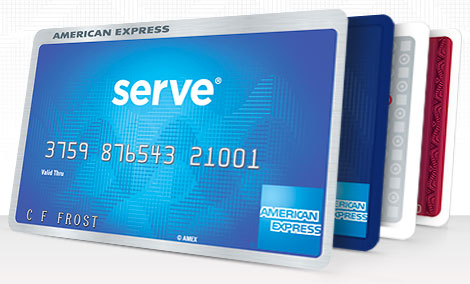
    In October of 2012 American Express and Walmart teamed up to launch Bluebird, a low-fee card meant to attract people unhappy with traditional checking and debit account fees. On April 21st of this year, Walmart and AmEx announced that they were joining forces again, this time to make the American Express Serve prepaid card available for sale at 4,100 of the retailer’s stores nationwide. The card will cost $1.95 and be sold at checkout lines and in Walmart MoneyCenters.

    This announcement instantly gives AmEx an attractive bragging point in the increasingly competitive prepaid debit card industry. By making Serve available at thousands of Walmart stores, AmEx has has created the largest free cash reload network in America. In addition to Walmart, it is now possible for Serve customers to add cash to their Serve accounts for no charge at 19,500 locations, including CVS pharmacies and 7-Eleven locations.

    Customers can now go to the cash register at any of those locations and add as little as $20 or as much as $500 to their Serve accounts. This ubiquity is important, says Madeline Aufseeser, a senior analyst at Aite Group. “American Express Serve is making it even more convenient for consumers to add cash to their accounts so they can use those funds to quickly and easily manage their personal finances,” she says.

    This expansion of Serve is just the latest effort by AmEx to better serve the millions of so-called “unbanked” or “underbanked” Americans, who either don’t have a traditional bank account or are unhappy with what they do have. “By offering American Express Serve alongside Bluebird at Walmart, we’re expanding our portfolio of products to meet the needs of more Walmart shoppers,” says Dan Schulman, group president of Enterprise Growth at American Express. “Bluebird is a great option for the “unhappily banked” who are looking for a true alternative to the fees and hidden charges often associated with debit and checking. With Serve, our full service reloadable prepaid account, we can now provide the nearly 70 million Americans who are unbanked or underbanked a simple and affordable way to move and manage their money.”

    To go along with its expansion of the availability of Serve cards, AmEx is also launching an advertising campaign to highlight the benefits of its signature prepaid product. The TV ads are shot in a documentary style and are meant to highlight the struggles regular Americans who are either ignored or underserved by the traditional banking system face to make simple financial transactions.

    Where Can you Apply for American Express Serve Prepaid Card?

Credit and Debit Card Ratings