
The Occupy Card Moves Ahead

The Occupy Money Cooperative needs to raise $900,000 to make its card a reality.

by Chris Warren

The Occupy Wall Street Movement’s first steps into the financial services industry have not been particularly smooth. The announcement this past summer that the Occupy Money Cooperative, an offshoot of the anti-status quo coalition that grabbed the world’s attention with its street protests and barbed criticism of banks in the fall of 2011, would attempt to issue a prepaid debit card was an immediate source of fascination.

Yet when the proposed fees associated with the Occupy Card were unveiled in September, an avalanche of criticism quickly followed. Far from being hailed as a savior riding to the rescue of helpless citizens being preyed upon by the big banks, respected observers like Consumer Reports declared that the card’s fees were worse than many other products already on the market. “Our first look at those proposed fees shows that the Occupy Card needs some work if its sponsors truly want it to be superior to other prepaid cards,” declared the Consumer Reports review.

Nevertheless, the supporters of the Occupy Money Cooperative appear just as determined as ever to not only launch its prepaid debit card but to revolutionize the banking system. According to an article in the Cornell Daily Sun, the student newspaper at Ithaca, New York’s Cornell University, university professor Robert Hockett is among those working to make the card a reality.

According to the article by reporter, Helen Donnelly, the Occupy Card will be launched once Hockett and the other co-founders of the Occupy Money Cooperative can raise $900,000 in initial operating capital. The article does not say how close, or far, the group is from reaching that amount.

Despite its bumpy rollout, Cornell’s Hockett insists that Occupy’s ambitions are still to go well beyond just a prepaid debit card. “The Occupy Money Cooperative is beginning with the debit card. This debit card is a specific counterpart to cards like these that exist in existing banking institutions already offered. Chase Liquid is probably the best-known example,” Hockett told the newspaper. “The ultimate plan is to offer all the other services that these existing banking institutions already do, but on a non-profit basis.”

 

Author: Chris Warren

  • The Occupy Card Moves Ahead

    The Occupy Card Moves Ahead

    The Occupy Money Cooperative needs to raise $900,000 to make its card a reality.

    by Chris Warren

    The Occupy Wall Street Movement’s first steps into the financial services industry have not been particularly smooth. The announcement this past summer that the Occupy Money Cooperative, an offshoot of the anti-status quo coalition that grabbed the world’s attention with its street protests and barbed criticism of banks in the fall of 2011, would attempt to issue a prepaid debit card was an immediate source of fascination.

    Yet when the proposed fees associated with the Occupy Card were unveiled in September, an avalanche of criticism quickly followed. Far from being hailed as a savior riding to the rescue of helpless citizens being preyed upon by the big banks, respected observers like Consumer Reports declared that the card’s fees were worse than many other products already on the market. “Our first look at those proposed fees shows that the Occupy Card needs some work if its sponsors truly want it to be superior to other prepaid cards,” declared the Consumer Reports review.

    Nevertheless, the supporters of the Occupy Money Cooperative appear just as determined as ever to not only launch its prepaid debit card but to revolutionize the banking system. According to an article in the Cornell Daily Sun, the student newspaper at Ithaca, New York’s Cornell University, university professor Robert Hockett is among those working to make the card a reality.

    According to the article by reporter, Helen Donnelly, the Occupy Card will be launched once Hockett and the other co-founders of the Occupy Money Cooperative can raise $900,000 in initial operating capital. The article does not say how close, or far, the group is from reaching that amount.

    Despite its bumpy rollout, Cornell’s Hockett insists that Occupy’s ambitions are still to go well beyond just a prepaid debit card. “The Occupy Money Cooperative is beginning with the debit card. This debit card is a specific counterpart to cards like these that exist in existing banking institutions already offered. Chase Liquid is probably the best-known example,” Hockett told the newspaper. “The ultimate plan is to offer all the other services that these existing banking institutions already do, but on a non-profit basis.”


  • Green Dot and Walmart Expand Prepaid Partnership

    Green Dot and Walmart Expand Prepaid Partnership

    Six new Walmart MoneyCard prepaid debit cards are announced as the retailer expands its partnership with Green Dot

    by Chris Warren

    Just how well, or poorly, Green Dot Corporation, a leading supplier of prepaid debit cards, would fare in its latest quarterly earnings report was the source of considerable disagreement. In the weeks leading up to the company’s third quarter earnings announcement on Halloween, one Wall Street analyst covering the company downgraded his rating, saying that increased competition in the prepaid space from powerful entities like American Express would hurt Green Dot. Then, just days before Green Dot unveiled its earnings, another analyst pooh-poohed concerns that competition would scuttle Green Dot and elevated his rating.

    It’s unlikely that the actual earnings announcement by Green Dot will end the debate. Still, it would be hard to say that Green Dot is exactly wilting under the pressure of increased competition. Indeed, the company reported third quarter revenue of $136 million, an increase of 3 percent from the same quarter in 2012. But the picture wasn’t entirely rosy. Higher company expenses meant that Green Dot’s net income fell from $9.6 million in the third quarter of 2012 to $6.1 million this year, a drop of 36 percent.

    Green Dot CEO Steve Streit said the results bode well for the future. “We feel very good about the future prospects for our company and believe we are well-positioned to return to double digit revenue growth as we look towards 2014,” he said.

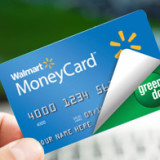
    One reason Streit is optimistic about Green Dot’s future is because on the same day as it revealed its third quarter earnings it also announced that it was expanding its partnership with Walmart. In the past Green Dot Bank issued three versions of the Walmart MoneyCard – the Basic, Plus and Preferred cards – each of which varied in the sorts of features they offered and in their costs.

    Now, thanks to its expanded collaboration with Green Dot, Walmart is offering a selection of new cards, each of which cost either $5 or $4.95 to purchase. Among the new choices are a “create your own” prepaid Visa, which allows cardholders to customize their card with a personal photograph. Other new cards are geared to NASCAR and NFL fans as well as outdoorsmen. The NASCAR prepaid Visas allow customers to choose between photos of Kasey Kahne, Danica Patrick, Tony Stewart, Jeff Gordon and Dale Earnhardt, Jr. NFL fans can have their cards emblazoned with one of 12 teams (more to come later) and the so-called Mossy Oak prepaid MasterCard gives its users special deals throughout hunting season.

Credit and Debit Card Ratings