
U.S. Government Urges Changes To Student Debit Cards

Debit cards and prepaid debit cards available to college students have plenty of room for improvement. That is the overriding conclusion of a recent report issued by the U.S. Government Accountability Office, or GAO, the investigative arm of the U.S. Congress.

The GAO opted to scrutinize student debit cards because the number of universities and colleges that have entered into agreements with financial companies to provide these products has been on the rise recently. According to the GAO report, 852 schools, or about 11 percent of all U.S. universities and colleges, have inked deals to provide debit and prepaid debit cards to students.

Not only have the number of agreements to provide student debit cards been on the rise recently, the GAO says that most of the cards currently available are used by schools to disburse financial aid and other funds. Some schools also utilize student debit cards as a form of identification.

Government investigators cited a number of specific areas where cards could be more student-friendly, including in the realm of fees. Although the GAO discovered that fees associated with student debit and prepaid debit cards were comparable with other available products, there were some exceptions. In particular, some student debit cards levied a fee on students who made purchases using a personal identification number (PIN) instead of a signature. This is a fee most mainstream cards don’t impose, note the report’s authors.

The GAO report also noted the potential problem of fee-free ATM access for the users of student debit cards. Although officials at nine of the schools surveyed by the GAO didn’t highlight any problems with the availability of fee-free campus ATMs, the report says that the lack of any specific guidelines regarding their availability could be problematic. Currently, the Department of Education requires that students receiving federal financial aid via a college card have “convenient access” to ATMs that do not charge fees, although there is no exact definition of what constitutes convenient.

The other major finding by the GAO regarded whether or not schools were encouraging students to obtain a card from a particular provider. In some cases, colleges have been pushing certain student debit cards rather than providing objective information about various products. The GAO report speculates that this may be due to financial incentives schools receive based on how many students sign up. The report also found that contracts between the financial institutions providing student debit cards and the schools were not publicly available.

To counteract what it sees in the current arrangement between schools and debit and prepaid debit card providers, the GAO has several specific recommendations. To improve transparency, it suggests that Congress require that agreements between schools and financial institutions be filed with the Consumer Financial Protection Bureau (CPFB) and be made available to the public. Additionally, the GAO urges the Department of Education to ensure that any school utilizing student debit cards to deliver federal financial aid make available objective information about payment options available to students. Additionally, the GAO suggests the Department of Education better define what “convenient access” to fee-free ATMs means.



Author: Curtis Arnold

  • U.S. Government  Urges Changes To Student Debit Cards

    U.S. Government Urges Changes To Student Debit Cards

    Debit cards and prepaid debit cards available to college students have plenty of room for improvement. That is the overriding conclusion of a recent report issued by the U.S. Government Accountability Office, or GAO, the investigative arm of the U.S. Congress.

    The GAO opted to scrutinize student debit cards because the number of universities and colleges that have entered into agreements with financial companies to provide these products has been on the rise recently. According to the GAO report, 852 schools, or about 11 percent of all U.S. universities and colleges, have inked deals to provide debit and prepaid debit cards to students.

    Not only have the number of agreements to provide student debit cards been on the rise recently, the GAO says that most of the cards currently available are used by schools to disburse financial aid and other funds. Some schools also utilize student debit cards as a form of identification.

    Government investigators cited a number of specific areas where cards could be more student-friendly, including in the realm of fees. Although the GAO discovered that fees associated with student debit and prepaid debit cards were comparable with other available products, there were some exceptions. In particular, some student debit cards levied a fee on students who made purchases using a personal identification number (PIN) instead of a signature. This is a fee most mainstream cards don’t impose, note the report’s authors.

    The GAO report also noted the potential problem of fee-free ATM access for the users of student debit cards. Although officials at nine of the schools surveyed by the GAO didn’t highlight any problems with the availability of fee-free campus ATMs, the report says that the lack of any specific guidelines regarding their availability could be problematic. Currently, the Department of Education requires that students receiving federal financial aid via a college card have “convenient access” to ATMs that do not charge fees, although there is no exact definition of what constitutes convenient.

    The other major finding by the GAO regarded whether or not schools were encouraging students to obtain a card from a particular provider. In some cases, colleges have been pushing certain student debit cards rather than providing objective information about various products. The GAO report speculates that this may be due to financial incentives schools receive based on how many students sign up. The report also found that contracts between the financial institutions providing student debit cards and the schools were not publicly available.

    To counteract what it sees in the current arrangement between schools and debit and prepaid debit card providers, the GAO has several specific recommendations. To improve transparency, it suggests that Congress require that agreements between schools and financial institutions be filed with the Consumer Financial Protection Bureau (CPFB) and be made available to the public. Additionally, the GAO urges the Department of Education to ensure that any school utilizing student debit cards to deliver federal financial aid make available objective information about payment options available to students. Additionally, the GAO suggests the Department of Education better define what “convenient access” to fee-free ATMs means.


  • For Prepaid Cards, Choose EMV Chip Cards, A Smart Card All Around

    For Prepaid Cards, Choose EMV Chip Cards, A Smart Card All Around

    By Curtis Arnold

    Besides the thieves themselves, the main culprit to emerge from the recent heist of personal information from over 100 million Target and Neiman Marcus shoppers isn’t human at all. Rather, the unlikely villain is a decades old piece of technology known simply as the magstripe, or magnetic stripe, that graces the backs of billions of credit, debit and prepaid debit cards carried by Americans in their pocketbooks and wallets everyday.

    But, there is an alternative on the way, the EMV chip card.

    In a way that not even the most well crafted editorials or investigative journalism series could have accomplished, the collective anger spawned by millions of consumers has focused a spotlight on the inability of magnetic stripe technology to safeguard the critical account and personal data it contains. “Basically, the magnetic strip contains all the data needed for credit card fraud,” says Lamar Bailey, Director of Security Research for Tripwire, a data security firm that works with companies like Visa, MasterCard and Safeway. “Unfortunately, these strips are very easy to read and duplicate and are a favorite target for a wide variety of financial fraud.”

    ***************************************************************
    [button link=”#Comments” variation=”darkgrey”]We want your opinion![/button]  What do you think of the recent security breaches?  How safe do you feel your personal data is currently?  What are your main concerns about using credit, debit or prepaid cards?  We want to hear from you!  Just add in your thoughts in the Comments section below!
    ***************************************************************

    As difficult as the lesson has been to learn, there is now a more widespread understanding of the need to quickly embrace so-called smart cards. Also known as EMV or chip and PIN cards, they have been the standard in Europe for years and offer far greater identity protection than magnetic strips. Introduced in the 1990s in Europe, these so-called EMV cards take their name from Europay/MasterCard/Visa. As Robert Siciliano, the CEO of IDTheftSecurity.com, explains it, EMV chip cards contain an embedded microchip that is authenticated using a personal identification number, or PIN. “When a customer uses a smart card to make a purchase, the card is placed into a PIN pad terminal or a modified swipe-card reader, which accesses the card’s microchip and verifies the card’s authenticity. The customer then enters a four digit PIN, which is checked against the PIN stored on the card.”

    This is another way of saying that smart cards are a tougher nut for identity thieves to crack – and a good explanation as to why global cyber criminals have set their sights on the U.S. It also means that, whenever possible, American consumers should choose a payment card that offers EMV chip protection. This is particularly true for the growing number of Americans who utilize prepaid debit cards.

    While it’s true that the prepaid debit card industry has been exploding recently – Mercator Advisory Groups reports that Americans loaded $192 billion onto prepaid cards in 2012 – the mainstreaming of a product once favored primarily by those who couldn’t get bank accounts or credit cards has not yet been accompanied by stronger consumer protections. For instance, if a credit card is lost or stolen, federal law limits consumer liability to just $50, although most major card issuers offer zero liability. Federal law also protects debit cards, although limiting liability depends on a consumer quickly reporting a card lost or stolen. By sharp contrast, prepaid debit cards do not have blanket protection. The terms and conditions vary depending on the card issuer, with some being quite good and others nonexistent.

    Because of that lack of protection, prepaid debit card users concerned about fraud can avoid having their accounts cleaned out by getting an EMV chip card. Unfortunately, these smart cards are not available everywhere – not even close. Some card issuers, such as the Members 1st Federal Credit Union, do offer EMV chip reloadable prepaid cards. But as is the case with most debit and credit cards, a smart card option is not yet available. “EMV has not been popular in the US because of the high cost of replacing all the credit card readers and millions of credit cards,” says Lamar Bailey of Tripwire.

    What can change that? For many credit and debit card issuers, the change is underway and expected to be complete by 2017. A combination of public pressure, regulation and simple self-interest could prompt the same move by prepaid card providers. “The technology in a magnetic stripe card has been hacked and decimated,” says Siciliano of IDTheftSecurity.com. “EMV for prepaid cards would bring them to the same security standard as credit and debit cards and more than likely open up a new market for card providers.”

    Photo Information below.

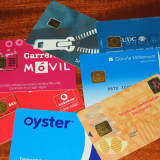
    Caption:  By 2017, look for embedded security chips to be present in all US credit and debit cards. (Photo credit: Wikipedia)

    ***************************************************************
    [button link=”#Comments” variation=”darkgrey”]We want your opinion! [/button] What do you think of the recent security breaches?  How safe do you feel your personal data is currently?  What are your main concerns about using credit, debit or prepaid cards?  We want to hear from you!  Just add in your thoughts in the Comments section below!
    ***************************************************************

Credit and Debit Card Ratings