
Debit Cards and Rewards

The demise of debit card rewards program have been greatly – well, make that slightly – exaggerated

The government’s response to the financial meltdown in 2008 was years in the making and an extremely controversial piece of legislation that passed on a strictly party line vote. One component of the sweeping Dodd-Frank Act, which President Obama signed into law in 2010, is now thought of as the death knell for debit card reward programs.

Inserted into Dodd-Frank Act at the last minute, the so-called Durbin Amendment, named after its sponsor, Illinois Senator Dick Durbin, capped the fees banks can charge retailers when customers purchase something with a debit card. The Durbin Amendment capped at 21 cents the fee banks are allowed to charge retailers when a customer swipes a debit card. Earlier, banks charged an average of 44 cents per transaction. Banks complained that the new limit would cost them billions of dollars, which is certainly true, and in response began to institute a variety of new fees on checking accounts and rolling back their rewards programs to compensate for the lost revenue. (You can take a look at the full Dodd-Frank Act / H.R. 4173 at the following link, but be warned: this is an 848 page PDF file and it may take a while to load, especially if you are on a slower connection. http://www.sec.gov/about/laws/wallstreetreform-cpa.pdf)

Contrary to the protests, though, not all debit card rewards programs are extinct. Here are a few that are still kicking:

Cash Back Lives

Unlike so much of the jargon used in the financial world, this is a program that does exactly what it says. You get a small percentage of your purchase amount credited back to your bank account. However, there are some limitations. This bonus is applicable only if you purchase at participating retailers. Ally Bank, Beneficial Bank and PerkStreet Financial offer cash-back rewards programs. For example, the online bank PerkStreet offers 1% cash back on most purchases and 2% if you purchase from select online retailers, including Amazon, Target, BestBuy and Wal-Mart.

Points and Prizes

As much as people love to get cash back for purchases they have to make anyway, earning a few extra bucks doesn’t feel at all like getting a present. Many debit card issuers understand that there’s more of a thrill when your use of their card actually earns you something tangible, like a meal at a restaurant. That’s why banks and credit unions reward their customers with points for everything from carrying high balances to making minimum deposits to, of course, using their debit cards.

These rewards programs are straightforward: use the debit card to earn points, which can then be redeemed for a variety of different prizes. For instance, at the time of this writing, Chase has the Disney Visa debit card, which offers deals such as a $50 credit toward Disney Cruise Line vacations and a 10% discount at select Disney Resort restaurants. Logix Federal Credit Union’s debit card reward points that can be used on electronics, round-trip travel on any major airline, gift cards and even adventures like hot air balloon rides and whitewater rafting.

Size Matters

With all the protests banks were lodging about the impact of the Durbin Amendment, you may wonder how banks can still afford to offer rewards. It’s simple. The Durbin Amendment does not apply to banks that have less than $10 billion in assets. So, smaller banks are not affected.

Don’t Rush In

Keep in mind that rewards programs are not offered by banks out of selfless altruism. No, banks promote these reward debit cards because they make the bank money. As with so much in the personal finance universe, that is accomplished through fees. Most debit reward cards come with fees. For example, Bank of America’s annual fee for its Alaska Air debit rewards card is $30. Don’t forget that there is no such thing as a free lunch. Rewards programs are aimed at making accounts more attractive; they don’t make the account fundamentally better.

So, when opening a debit card account, make sure that the basic features of the account fit your needs. Don’t rush into an account just for the rewards program. Otherwise, your fees could easily surpass your rewards — and where’s the reward in that?

Author: Shane Tripcony

  • Debit Cards and Rewards

    Debit Cards and Rewards

    The demise of debit card rewards program have been greatly – well, make that slightly – exaggerated

    The government’s response to the financial meltdown in 2008 was years in the making and an extremely controversial piece of legislation that passed on a strictly party line vote. One component of the sweeping Dodd-Frank Act, which President Obama signed into law in 2010, is now thought of as the death knell for debit card reward programs.

    Inserted into Dodd-Frank Act at the last minute, the so-called Durbin Amendment, named after its sponsor, Illinois Senator Dick Durbin, capped the fees banks can charge retailers when customers purchase something with a debit card. The Durbin Amendment capped at 21 cents the fee banks are allowed to charge retailers when a customer swipes a debit card. Earlier, banks charged an average of 44 cents per transaction. Banks complained that the new limit would cost them billions of dollars, which is certainly true, and in response began to institute a variety of new fees on checking accounts and rolling back their rewards programs to compensate for the lost revenue. (You can take a look at the full Dodd-Frank Act / H.R. 4173 at the following link, but be warned: this is an 848 page PDF file and it may take a while to load, especially if you are on a slower connection. http://www.sec.gov/about/laws/wallstreetreform-cpa.pdf)

    Contrary to the protests, though, not all debit card rewards programs are extinct. Here are a few that are still kicking:

    Cash Back Lives

    Unlike so much of the jargon used in the financial world, this is a program that does exactly what it says. You get a small percentage of your purchase amount credited back to your bank account. However, there are some limitations. This bonus is applicable only if you purchase at participating retailers. Ally Bank, Beneficial Bank and PerkStreet Financial offer cash-back rewards programs. For example, the online bank PerkStreet offers 1% cash back on most purchases and 2% if you purchase from select online retailers, including Amazon, Target, BestBuy and Wal-Mart.

    Points and Prizes

    As much as people love to get cash back for purchases they have to make anyway, earning a few extra bucks doesn’t feel at all like getting a present. Many debit card issuers understand that there’s more of a thrill when your use of their card actually earns you something tangible, like a meal at a restaurant. That’s why banks and credit unions reward their customers with points for everything from carrying high balances to making minimum deposits to, of course, using their debit cards.

    These rewards programs are straightforward: use the debit card to earn points, which can then be redeemed for a variety of different prizes. For instance, at the time of this writing, Chase has the Disney Visa debit card, which offers deals such as a $50 credit toward Disney Cruise Line vacations and a 10% discount at select Disney Resort restaurants. Logix Federal Credit Union’s debit card reward points that can be used on electronics, round-trip travel on any major airline, gift cards and even adventures like hot air balloon rides and whitewater rafting.

    Size Matters

    With all the protests banks were lodging about the impact of the Durbin Amendment, you may wonder how banks can still afford to offer rewards. It’s simple. The Durbin Amendment does not apply to banks that have less than $10 billion in assets. So, smaller banks are not affected.

    Don’t Rush In

    Keep in mind that rewards programs are not offered by banks out of selfless altruism. No, banks promote these reward debit cards because they make the bank money. As with so much in the personal finance universe, that is accomplished through fees. Most debit reward cards come with fees. For example, Bank of America’s annual fee for its Alaska Air debit rewards card is $30. Don’t forget that there is no such thing as a free lunch. Rewards programs are aimed at making accounts more attractive; they don’t make the account fundamentally better.

    So, when opening a debit card account, make sure that the basic features of the account fit your needs. Don’t rush into an account just for the rewards program. Otherwise, your fees could easily surpass your rewards — and where’s the reward in that?

  • Mossy Oak Prepaid Debit MoneyCard (Walmart)

    Mossy Oak Prepaid Debit MoneyCard (Walmart)

    Note! This card does NOT help you build credit. Click here to compare secured credit cards (which are similar to prepaid cards) that help you build or rebuild your credit.

    Also, a few secured cards do not charge annual or monthly fees, unlike the monthly fees charged by prepaid cards. (Ad Link*)

    By Shane Tripcony
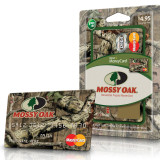
    In December 2012, the Mossy Oak Walmart MoneyCard made its debut at nearly 2,000 participating Walmart stores nationwide. The prepaid Debit MasterCard is issued by GE Capital Retail bank with program management provided by Green Dot Corporation. The Mossy Oak card is reloadable and helps users manage their money conveniently and safely without the worry of overdraft fees or penalties. The card does not require a credit check or bank account and can be used anywhere Debit MasterCard ® is accepted. Reloading is easy, with cash and checks at Walmart stores or online at walmartmoneycard.com.

    Debuting during hunting season, the Mossy Oak Card, features the Break-Up Infinity ® camouflage design. The Cards can be found on sale at participating stores in the Walmart MoneyCenter, in the check-out lanes, as well as in the hunting section of Walmart participating stores.

    “It makes perfect sense, with all the offerings Walmart has for hunters and outdoors enthusiasts, that there is a Mossy Oak camouflage card option,” said Chris Paradise, Senior Vice President/Chief Sales Officer at Mossy Oak. “Walmart produces many specialty cards and now there’s one for hunters!”

    Mossy Oak is owned and operated under its parent company, Haas Outdoors, Inc. The mossy oak patterns can be found on a multitude of products worldwide. Green Dot is a publicly traded bank holding company primarily regulated by the Board of Governors of the Federal Reserve System. For more information on Green Dot, visit greendot.com.

Credit and Debit Card Ratings