
Changes To American Express Serve Cards

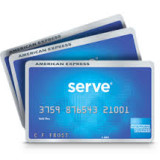
Starting in November, American Express Serve prepaid customers will be able to add cash to their accounts at CVS and 7-Eleven with no fees.

by Shane Tripcony

The competition to serve the millions of Americans lacking traditional bank accounts just got a little stiffer. On October 8, American Express announced significant new changes to how its Serve prepaid card works. Starting in November, Serve customers will be able to load cash to their accounts, for free, while shopping at over 14,000 CVS and 7-Eleven stores nationwide. Additionally, American Express Serve customers will also be able to add funds via direct deposit of a paycheck without incurring a fee. By the end of 2013, customers with a smartphone camera will be able to take a picture of a paper check and add that money directly into their account by using Serve’s mobile app.

In making these changes to how the Serve card functions, American Express declared that it was directly targeting the almost 70 million so-called “under banked” Americans. “Unfortunately, the traditional banking system is not easily accessible to large segments of the population, making managing money cumbersome and expensive for many,” says Dan Schulman, Group President of Enterprise Growth at American Express. “Today, we’ve added a number of new features to make the management and movement of money more affordable and convenient for everyone.”

In the past, individuals who did not have bank accounts have had to rely on check cashing or payday loan services. Many of which charge exorbitant fees or prepaid debit cards layered with charges for everything from adding money to an account to checking a balance. While there are still plenty of prepaid cards that charge high fees, more and more big financial players like Chase, U.S. Bank and PNC are now offering low-fee options.

The changes American Express has made to its Serve card are meant to address what it sees as the substantial charges that come with simply adding money to an account. Citing research from Javelin Strategy and Research, American Express says that 41 percent of under banked customers report paying between $3.00 and $3.99 to reload their prepaid cards. Depending on how often someone reloads their card, American Express estimates that utilizing Serve, which charges a $1 monthly fee, could save between $72 and $240 annually. The savings could be even greater if a Serve customer opts to use direct deposit or adds at least $500 to an account over the course of a month.

In addition to a variety of fee-free ways to add money to Serve card accounts, American Express also allows customers to withdraw money from MoneyPass ATMs for free as well as pay bills for free using Serve.com and the Serve mobile app.

Author: Shane Tripcony

  • Changes To American Express Serve Cards

    Changes To American Express Serve Cards

    Starting in November, American Express Serve prepaid customers will be able to add cash to their accounts at CVS and 7-Eleven with no fees.

    by Shane Tripcony

    The competition to serve the millions of Americans lacking traditional bank accounts just got a little stiffer. On October 8, American Express announced significant new changes to how its Serve prepaid card works. Starting in November, Serve customers will be able to load cash to their accounts, for free, while shopping at over 14,000 CVS and 7-Eleven stores nationwide. Additionally, American Express Serve customers will also be able to add funds via direct deposit of a paycheck without incurring a fee. By the end of 2013, customers with a smartphone camera will be able to take a picture of a paper check and add that money directly into their account by using Serve’s mobile app.

    In making these changes to how the Serve card functions, American Express declared that it was directly targeting the almost 70 million so-called “under banked” Americans. “Unfortunately, the traditional banking system is not easily accessible to large segments of the population, making managing money cumbersome and expensive for many,” says Dan Schulman, Group President of Enterprise Growth at American Express. “Today, we’ve added a number of new features to make the management and movement of money more affordable and convenient for everyone.”

    In the past, individuals who did not have bank accounts have had to rely on check cashing or payday loan services. Many of which charge exorbitant fees or prepaid debit cards layered with charges for everything from adding money to an account to checking a balance. While there are still plenty of prepaid cards that charge high fees, more and more big financial players like Chase, U.S. Bank and PNC are now offering low-fee options.

    The changes American Express has made to its Serve card are meant to address what it sees as the substantial charges that come with simply adding money to an account. Citing research from Javelin Strategy and Research, American Express says that 41 percent of under banked customers report paying between $3.00 and $3.99 to reload their prepaid cards. Depending on how often someone reloads their card, American Express estimates that utilizing Serve, which charges a $1 monthly fee, could save between $72 and $240 annually. The savings could be even greater if a Serve customer opts to use direct deposit or adds at least $500 to an account over the course of a month.

    In addition to a variety of fee-free ways to add money to Serve card accounts, American Express also allows customers to withdraw money from MoneyPass ATMs for free as well as pay bills for free using Serve.com and the Serve mobile app.

  • Walgreen’s Launches A Prepaid Card

    Walgreen’s Launches A Prepaid Card

    The drugstore chain puts a prepaid debit card at the center of its financial services options

    by Shane Tripcony

    Walgreen’s is already the place millions of Americans head to in order to pick up everything from deodorant to Halloween candy to prescription drugs. Now the nationwide drugstore chain is adding financial services, including a prepaid debit card, to its already lengthy menu of offerings.

    On October 7, 2013 the Illinois-based retail giant announced that its new Balance Financial Prepaid MasterCard is available to customers in 250 Walgreen’s stores in Detroit, Milwaukee and Nashville. The company also said that the new prepaid debit card will be available nationwide by the end of the year.

    In making a foray into the prepaid debit card market, Walgreen’s reiterated a reality that has already prompted so many other large banks and financial institutions to unveil their own products. The many Americans lacking traditional bank accounts need an alternative to cash transactions and ultra-high fee check cashing and payday lending services. “Millions of Americans do not have – or want alternatives to – traditional checking accounts and debit cards,” says Jason Dubinsky, Walgreen’s vice president and treasurer. “For them, Balance Financial will represent safety, convenience, value and rewards. With Balance Financial as our platform, over time we plan to add more features and functionality that give our customers even more powerful financial tools to get, stay and live well.”

    In other words, the new Walgreen’s prepaid debit card is just the start. While Walgreen’s is already planning to offer Western Union Money Transfers and bill payment services in 2014, the details around the features of its prepaid debit card have already been set. Notably, the card will allow for no-fee ATM withdrawals for cardholders at most of the 8,000-plus Walgreen’s and Duane Reade stores nationwide. Balance Financial customers will also be able to check their account balance, move funds and view previous transactions on a website, mobile app or even at in-store kiosks. Like many other prepaid debit cards, Balance Financial can be reloaded for free via direct deposit. Also like similar products, the Walgreen’s prepaid card comes with a variety of fees, including a $2.95 account activation fee and a $2.95 monthly charge.

    Where the new Walgreen’s card is somewhat different from its competitors is in how it is synchronized with the store’s customer loyalty program. Use of the Balance Financial prepaid card earns points for every dollar a customer spends at Walgreen’s. Users of the card can also earn points for in-store reloads and direct deposits, points that can be used for future savings and other benefits. Dan Caplinger, the financial website Motley Fool’s Director of Investment Planning, recently wrote that this is the “real genius of the Walgreen’s offering” because it encourages customers to stick with the drugstore and make repeat visits. “If it’s successful, then you can expect not only Rite Aid and other direct competitors to follow suit but also a broader set of retailers hoping to cash in on the same trend,” he says.

Credit and Debit Card Ratings